

With so many options available, choosing outdoor cushions can feel overwhelming, but getting it right lets you create a space that blends comfort, style and lasting durability.
This guide takes you through each step of the process. You’ll learn how to choose the best outdoor cushions that last, how to combine different designs and sizes, and how to arrange them in a way that feels balanced and intentional. From colour palettes to practical inserts, we’ll help you create a space that’s both relaxed and refined.
Whether your setup is a sunny balcony or a full outdoor lounge, this guide will help you make confident, stylish choices that go the distance.
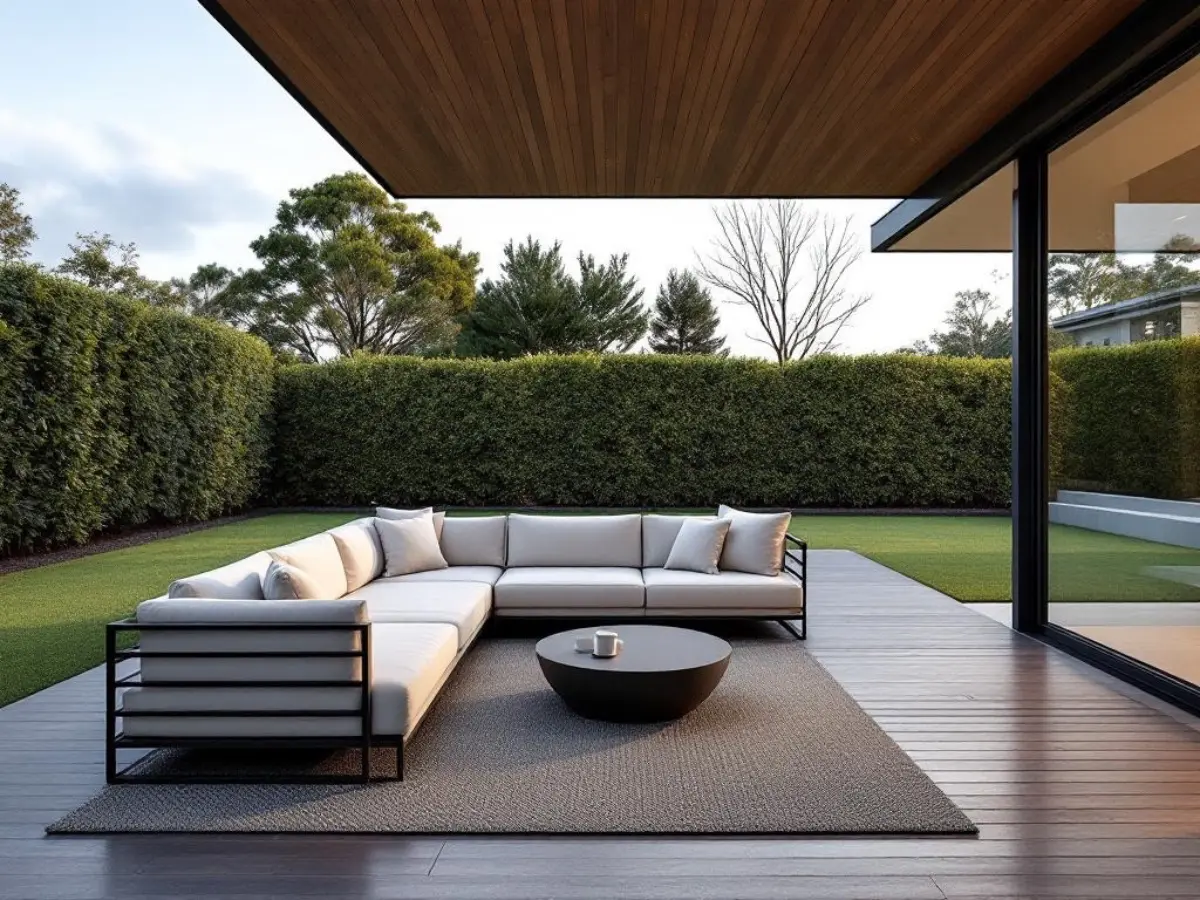
Get clear on your goal
Before choosing your outdoor cushions, it’s worth pausing to consider the space you’re styling and what you want your new designs to do for it.
Start by identifying where they’ll go. Is it a small balcony bench, an armchair in the sunny corner of your patio, or a full outdoor lounge setting? The furniture you’re styling will shape how many outdoor cushions you’ll need, and which sizes or combinations will work best.
Then think about the effect you’re hoping to create. Do you want to introduce a bold splash of colour, soften a dark setting, or echo the natural tones of your garden? This will help guide your design choices and create a space that feels intentional and inviting.
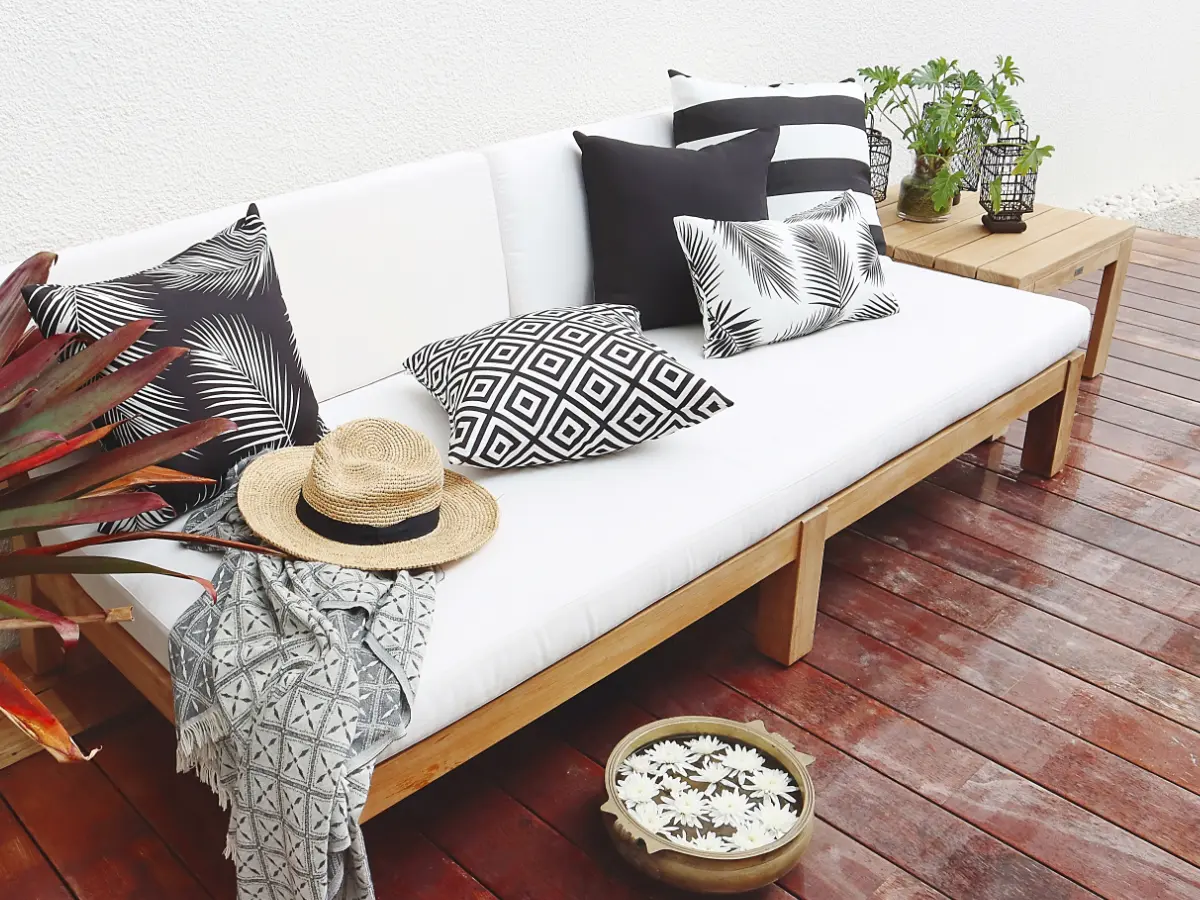
Choose colours that suit your outdoor area
Once you’re clear about the goal for your outdoor cushions, the next step is to choose your colours. The right colour can tie your outdoor setting together, create contrast, or echo the tones of the natural elements around it.
Start by looking at what already exists in your space. Consider the tones of your outdoor furniture, nearby walls or fencing, decking, pots, and even your plants. Maybe there’s some rich pinks in your garden or elegant black and whites in your pottery.
Your outdoor cushions don’t need to match these exactly, but they should work alongside them. Use these cues to help guide your colour direction and choose a general shade that will complement your space.
Once you’ve chosen a colour, there are two simple ways to build your palette: either keep things cohesive with a monochrome look, or create impact with a contrasting mix.

Monochrome palette
A monochrome palette sticks to one colour across multiple outdoor cushions. For example, pairing different sage green outdoor designs, like stripes, solids and patterns, creates a layered yet unified look. It’s simple, cohesive, and easy to get right.

Contrasting palette
A contrasting palette uses colours that stand apart to create visual impact, such as a rich outdoor blue with rust, or a deep outdoor charcoal with mustard. This approach adds energy and can help your outdoor cushions pop against more neutral surroundings.
Pick fabrics made for the outdoors
After settling on your colours, it’s time to think about fabric. Outdoor cushions aren’t just for show; they need to withstand sun, moisture, and everyday wear without fading, sagging, or developing mould. That’s why material matters.
Many low-cost options use untreated polyester or cotton blends. While they may look appealing initially, these pieces often fade, stain easily, or develop mould after even limited exposure to the elements, especially under the Australian sun.
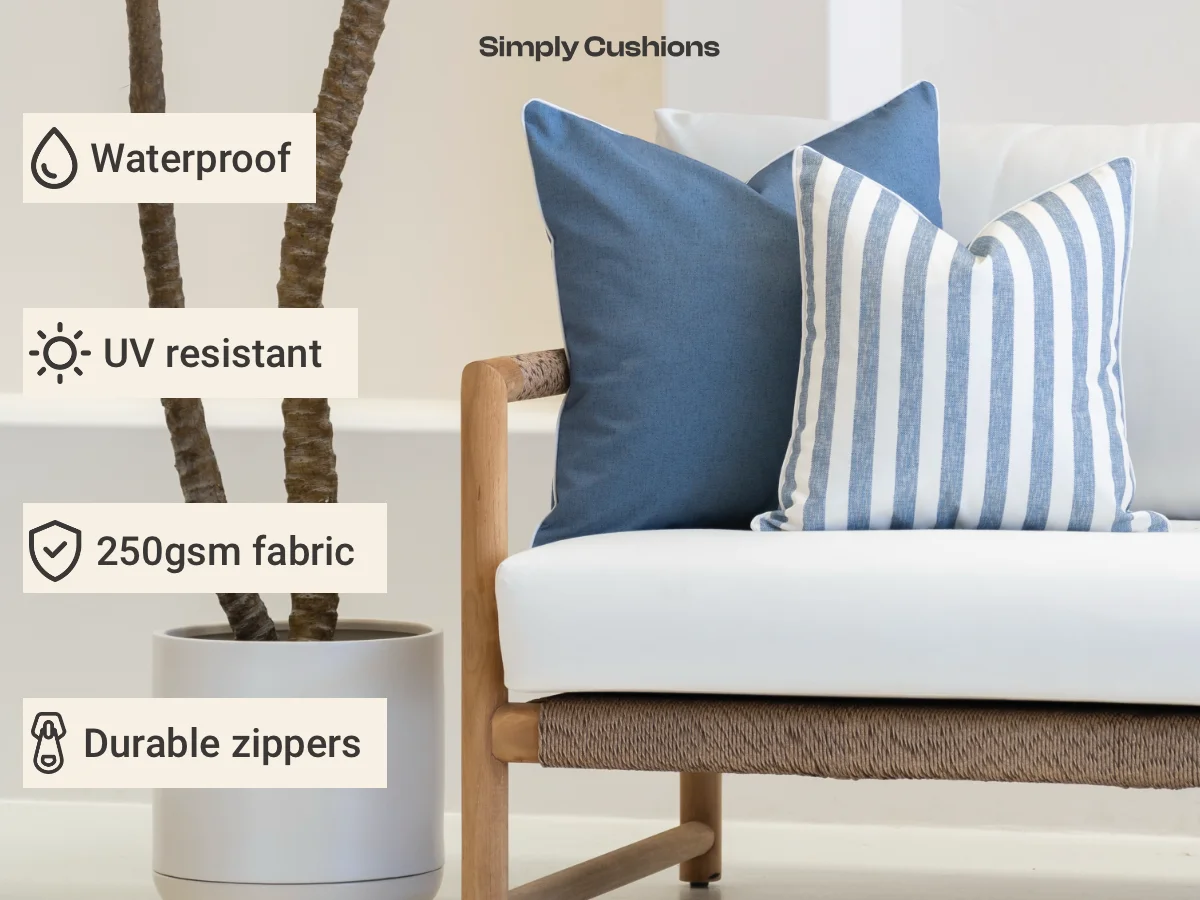
That’s why all our outdoor cushions are crafted with a premium 250gsm polyester fabric that’s made to perform. It’s waterproof, UV resistant, and with a colour fastness rating of 400 hours outdoor colours like vibrant yellow or deep black look great for longer. It’s soft to the touch yet tough enough for regular outdoor use, season after season.
Quality stitching and durable zippers ensure each outdoor cushion holds its shape and structure. And because every design is created to mix and match, it’s easy to create a look that suits your space, without compromising on longevity.
Decide on sizes and shapes
With your fabric locked in, the next step is to think about size and shape. Whether you’re styling a compact balcony bench or a large modular lounge, the right combination can help create structure, interest and comfort.
Mixing different shapes adds variety to your arrangement. A plump large outdoor design provides a solid base to style around, while a regular sized outdoor square or outdoor rectangle shape adds contrast and balance.
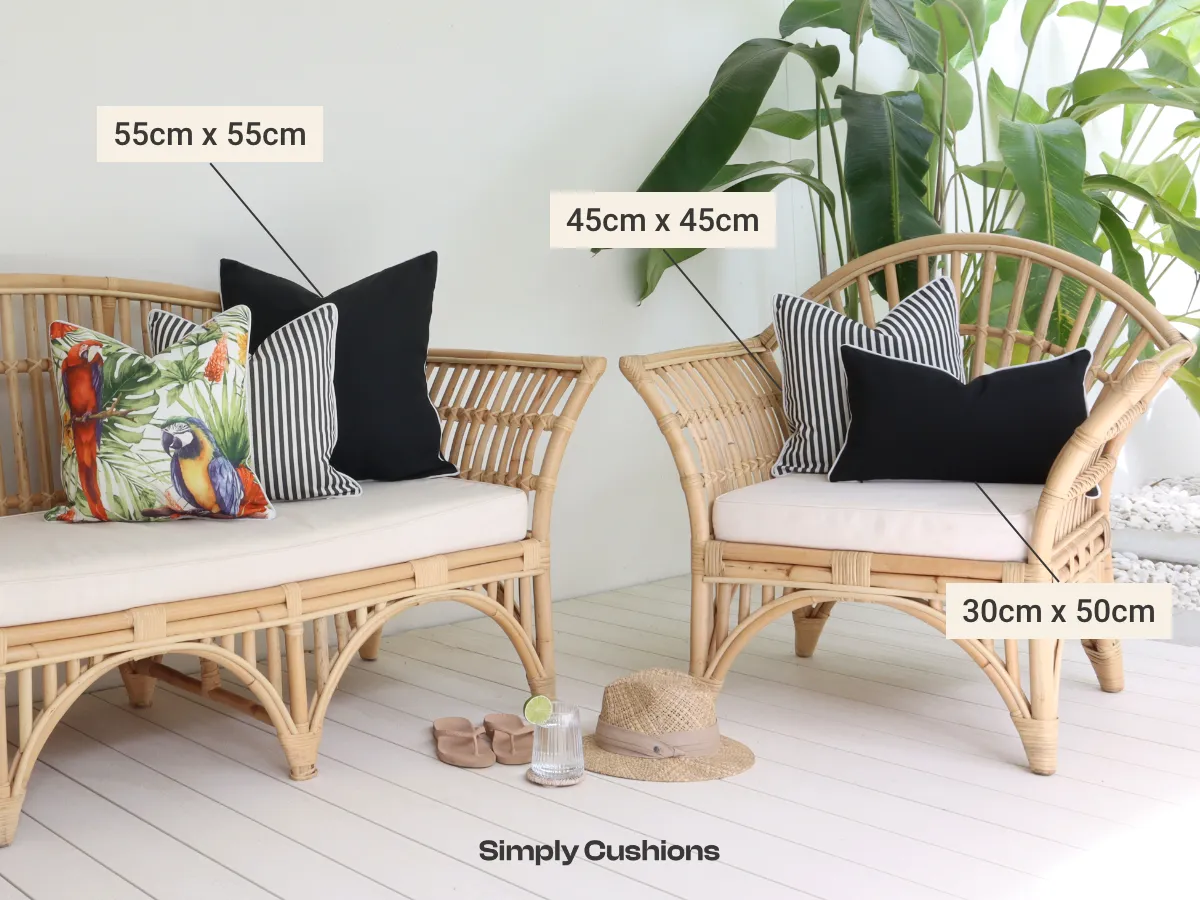
Here’s how the most common outdoor cushion sizes typically work in an arrangement:
- Large outdoor cushions (55x55cm): Make a great base for arrangements, ideal for anchoring the corners or back of your seating.
- Regular outdoor cushions (45x45cm): Are versatile and work well as mid-sized layering pieces or standalones on smaller furniture.
- Rectangle outdoor cushions (30x50cm): Are perfect for the front layer of your arrangement and can also double as lumbar support.
Combine solids, patterns and prints
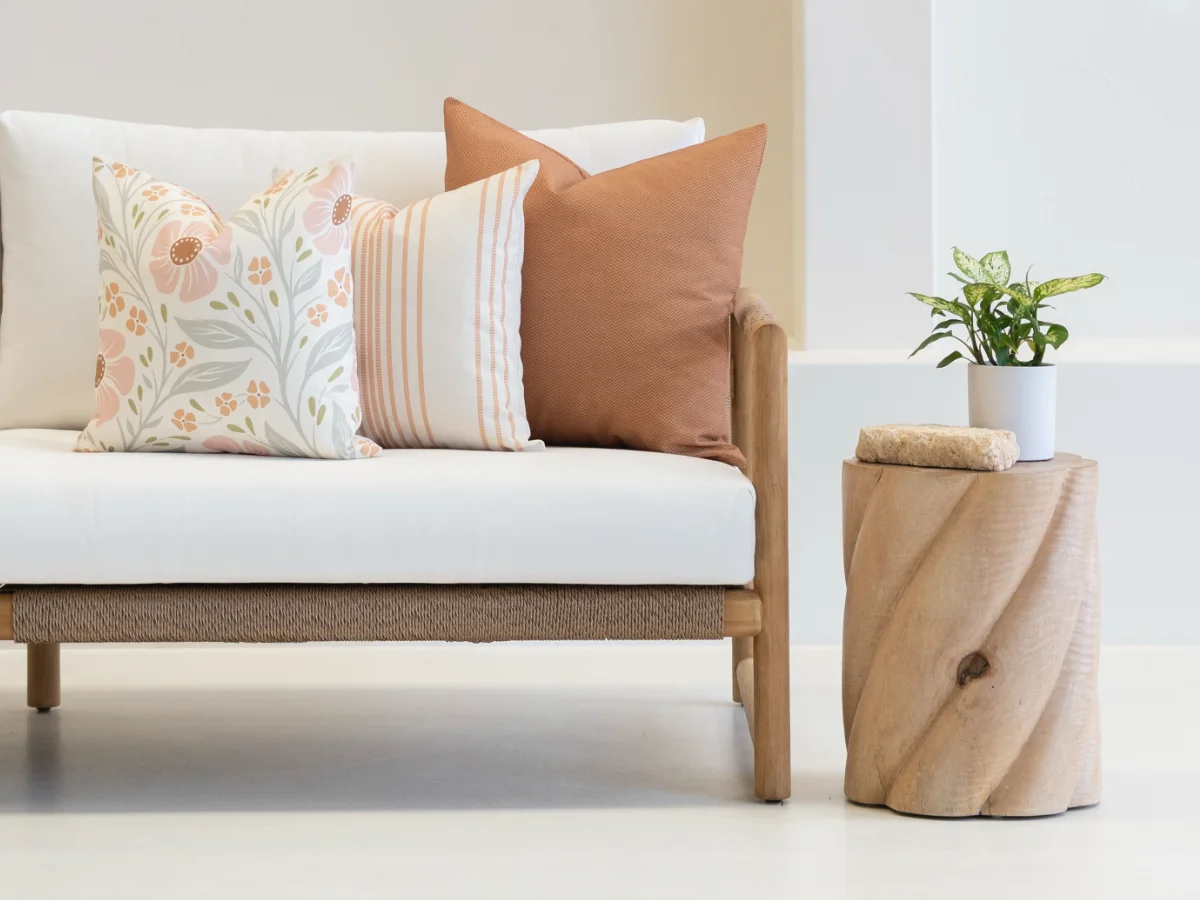
Once you’ve chosen your colours and sizes, the next step is deciding how to combine different designs. While outdoor cushions may not have the same range of textures as indoor ones, you can still create plenty of interest by mixing solids, patterns and prints.
Here are a few simple ‘outdoor cushion formulas’ that work well across our outdoor range:
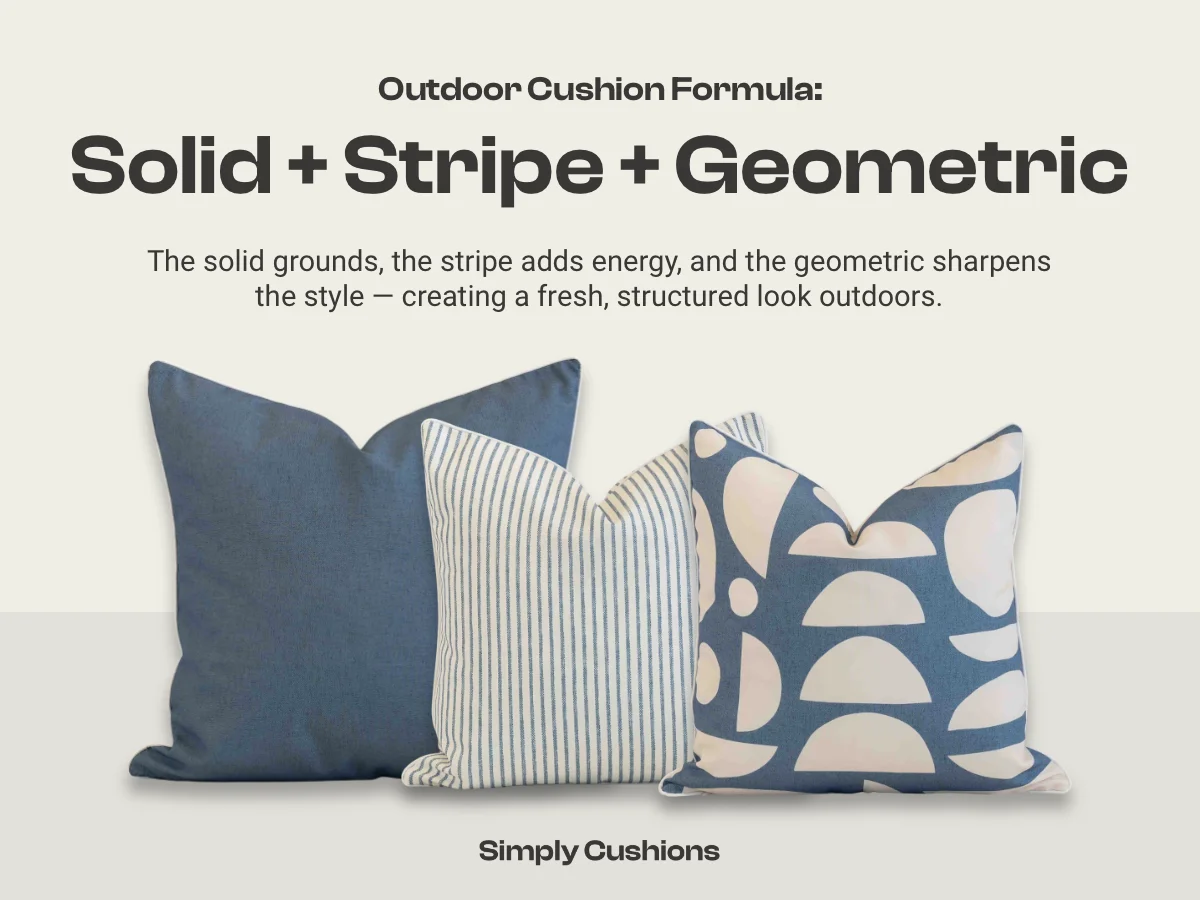
Solid + Stripe + Geometric
Use all three designs in the same colour, like outdoor grey, to create a layered look that feels unified and intentional. The mix of patterns adds interest without overwhelming the palette.
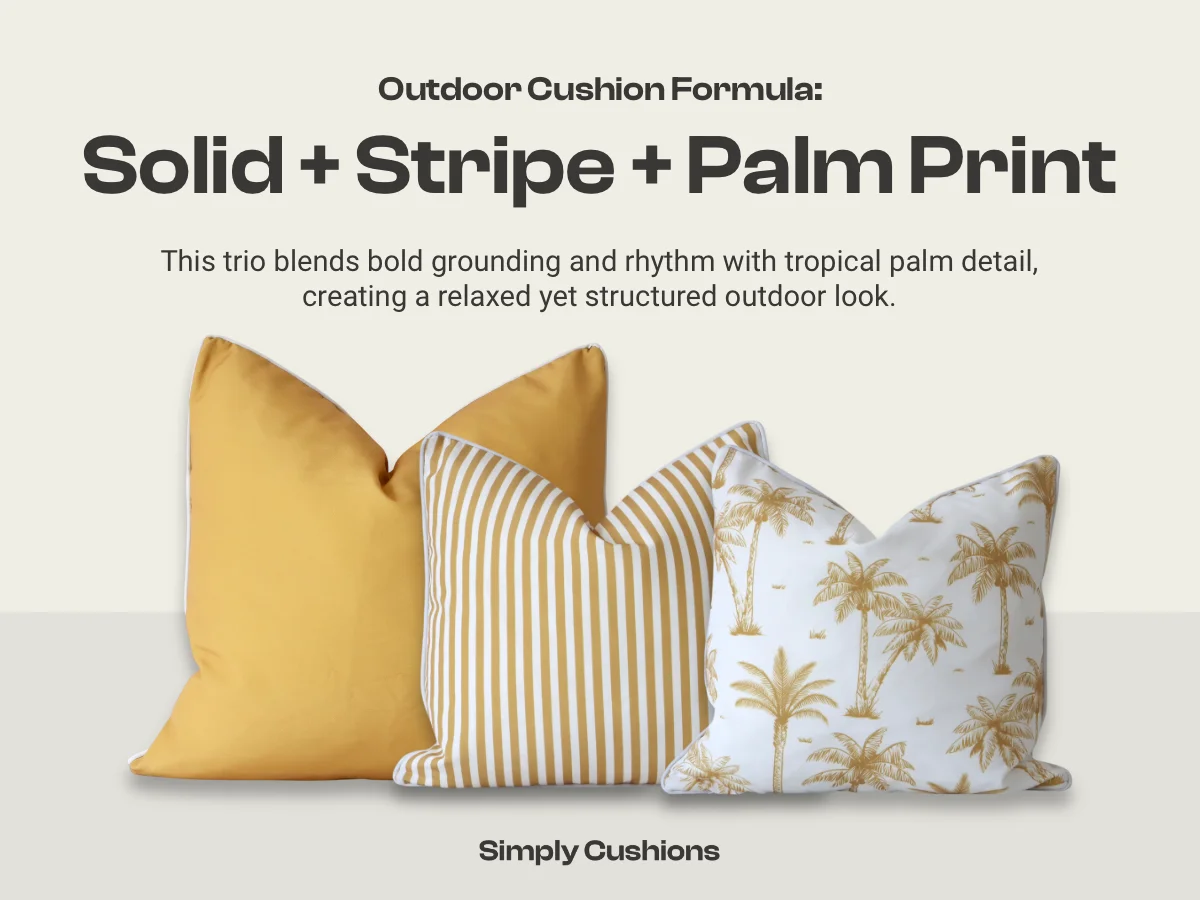
Solid + Stripe + Palm Print
Stick to a single colour across each design. The outdoor palm tree cushion introduces a natural motif, while the stripe and solid keep the look structured and grounded.
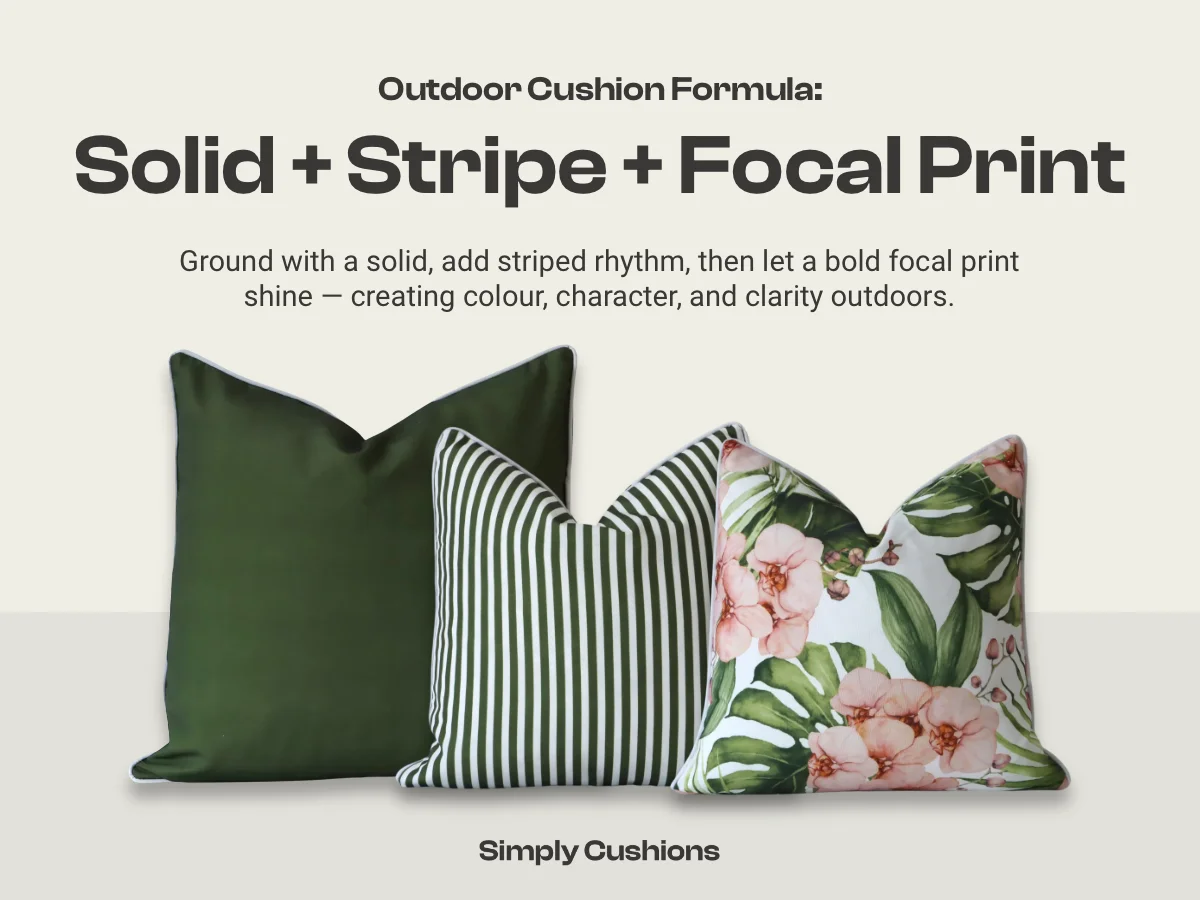
Solid + Stripe + Focal Print
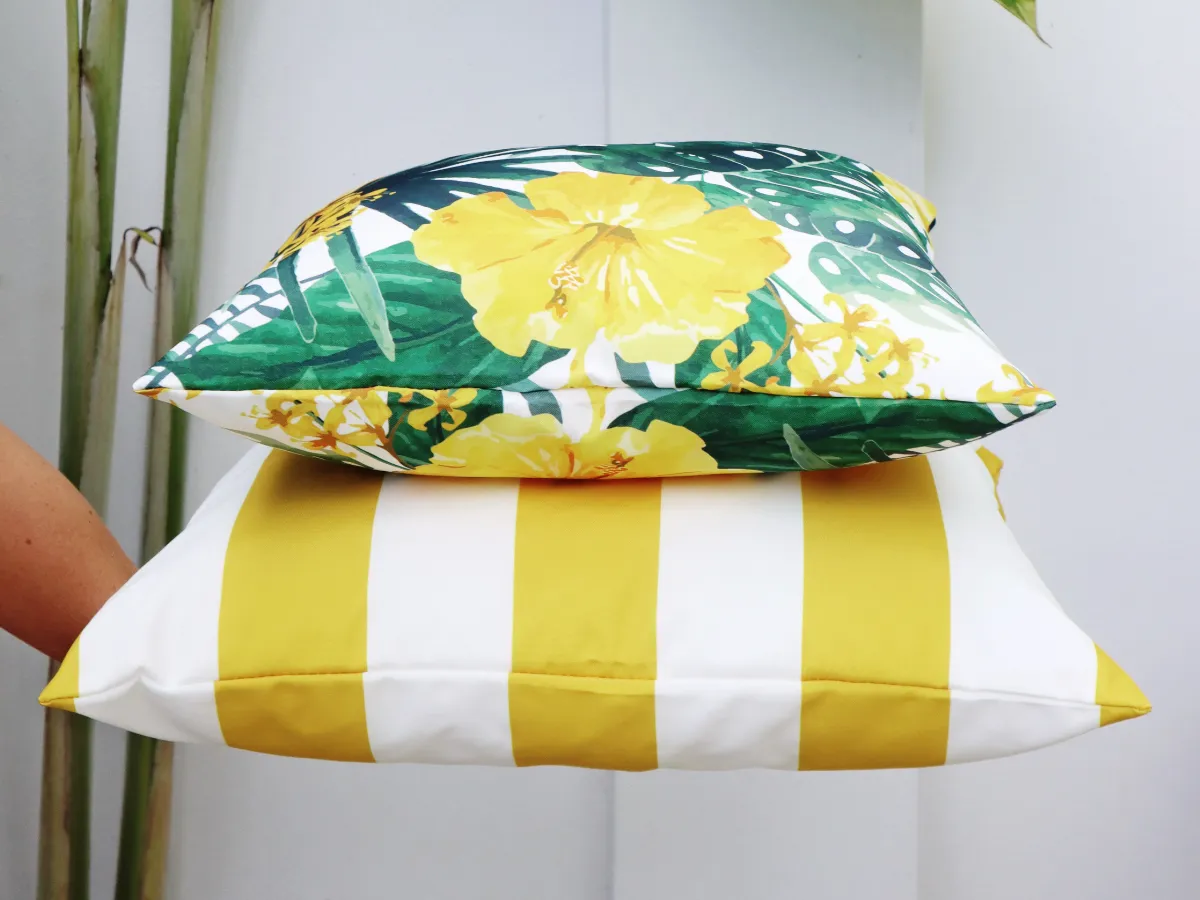
Choose a solid and a classic outdoor stripe in either the same or contrasting colours, then add a colourful focal print that ties them together. The focal print acts as a connector, making the contrast feel deliberate and cohesive.

Solid + Geometric + Focal Print
This pairing brings together sleek lines and bright accents. The solid and geometric can be monochrome or contrasting, while the colourful outdoor tropical focal print ties them together with a splash of brightness.
Know how many outdoor cushions you’ll need
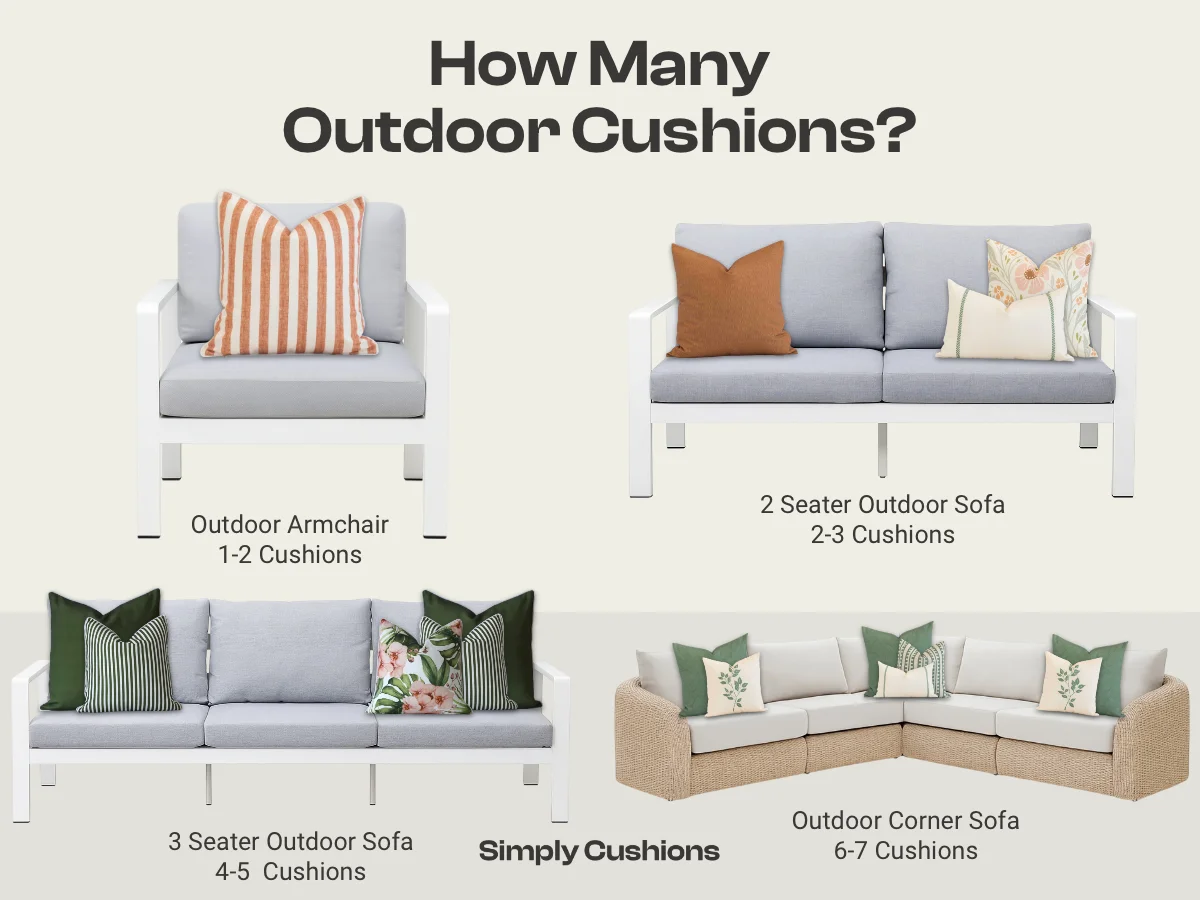
After narrowing down your colours and design choices, it’s time to think about how many outdoor cushions you’ll actually need. The right number depends on how your outdoor space is used, and the size of your outdoor sofa or the furniture where your designs will go.
Is your outdoor area all about relaxing, or is it a busy high-use space? For lounging areas where comfort is key, more outdoor cushions help create a relaxed and inviting feel. In high-traffic or low-maintenance spaces, fewer pieces can keep things simple and practical.
Outdoor furniture comes in many forms, from single chairs to more common outdoor couches, and the size of each piece affects the space available for your outdoor cushions. Here is some general guidance on the number of pieces suitable for different seating types:
- Single outdoor armchair: 1 or 2 for a simple, comfortable touch.
- 2-seater outdoor lounge or sofa: 2 or 3 provides structure without overcrowding.
- 3-seater outdoor lounge or sofa: 4 or 5 offers more design and layering options.
- Outdoor corner or L shaped lounge or sofa: 6 or 7 can create defined zones and cosy corners.
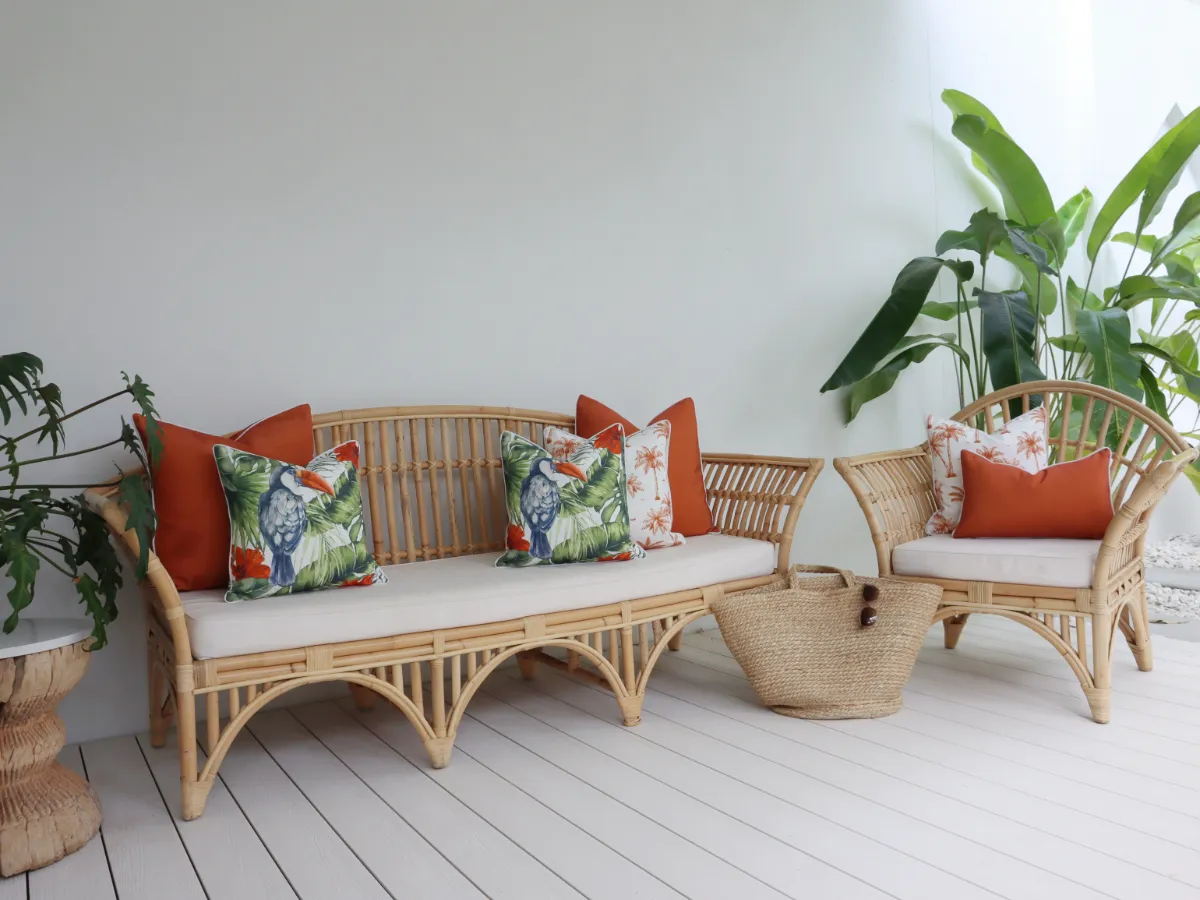
Consider how they’ll be arranged
It’s time to consider how your selected outdoor cushions will be arranged. This is a good final check to make sure you have the right sizes, designs, and numbers to suit your new outdoor setup. Think of it as a practice run before you receive your new designs.
There’s no one perfect formula for arranging outdoor cushions, but these simple principles can help guide you as you put your designs together:
- Layer from back to front: Start with your larger outdoor cushions at the back, layer regular-sized designs in front of these and finish with your smallest pieces for visual interest.
- Group them thoughtfully: Arrange outdoor cushions in groups to create a structured look; clusters, rows or pairs. This helps in defining seating areas and adds to the overall aesthetic.
- Symmetry or asymmetry: Matching symmetrical arrangements offer a formal, balanced appearance, while non-mirrored asymmetrical layouts provide a relaxed, casual vibe. Choose the style that best suits your outdoor setting.
Consider these layout ideas to suit different types of outdoor seating:
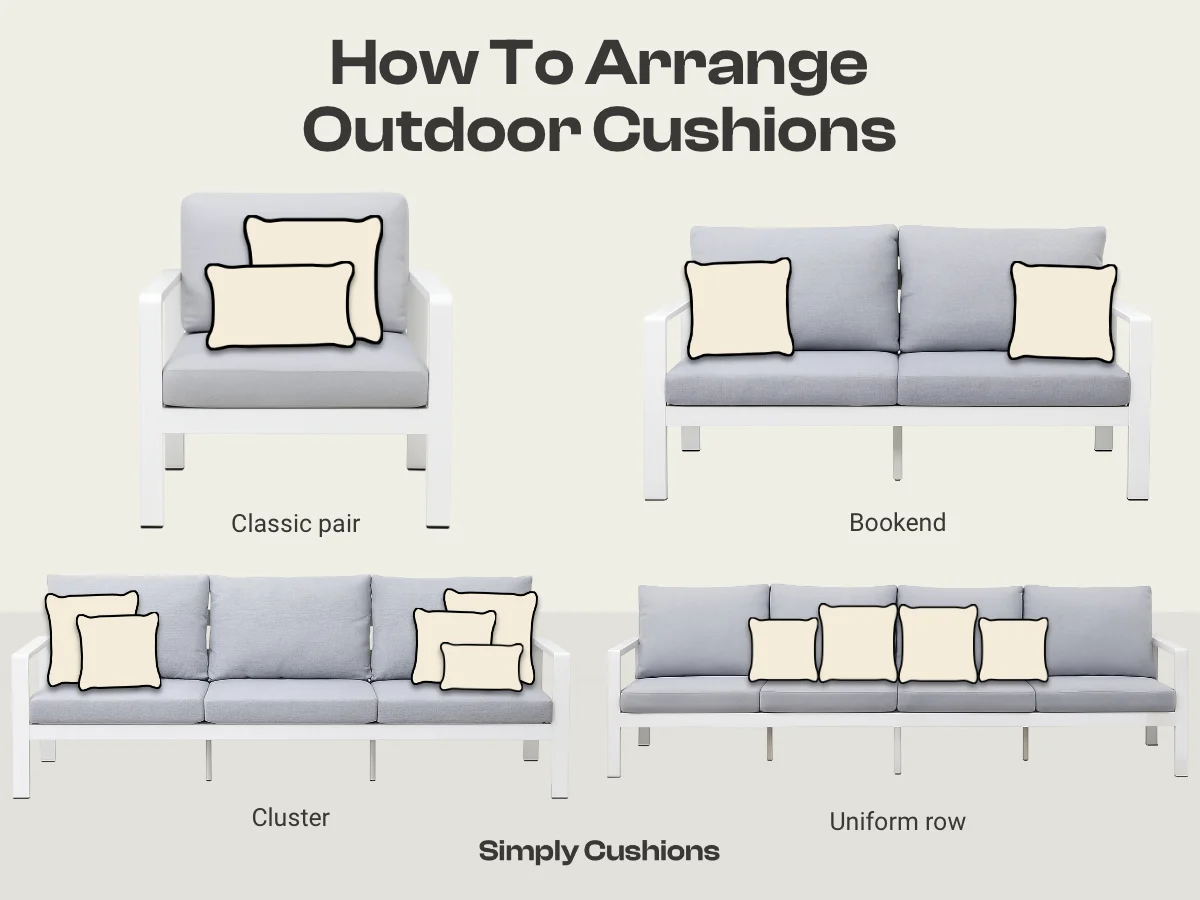
The classic pair
Ideal for armchairs or small benches. Place two outdoor cushions, one layered in front of the other, together to create a clean, cohesive look.
The cluster
Perfect for larger sofas or sectionals. Combine outdoor cushions of varying sizes and shapes in a grouped arrangement from largest to smallest to add depth and interest.
The bookend
Best for outdoor sofas or modular lounges. Place a large and small outdoor cushion at each end to frame the space. Add a central piece if extra comfort or contrast is needed.
The uniform row
Best suited for long benches or larger seating. Line up a series of three or four outdoor cushions in a single row for a streamlined, orderly appearance.
Choose inserts that can handle the outdoors
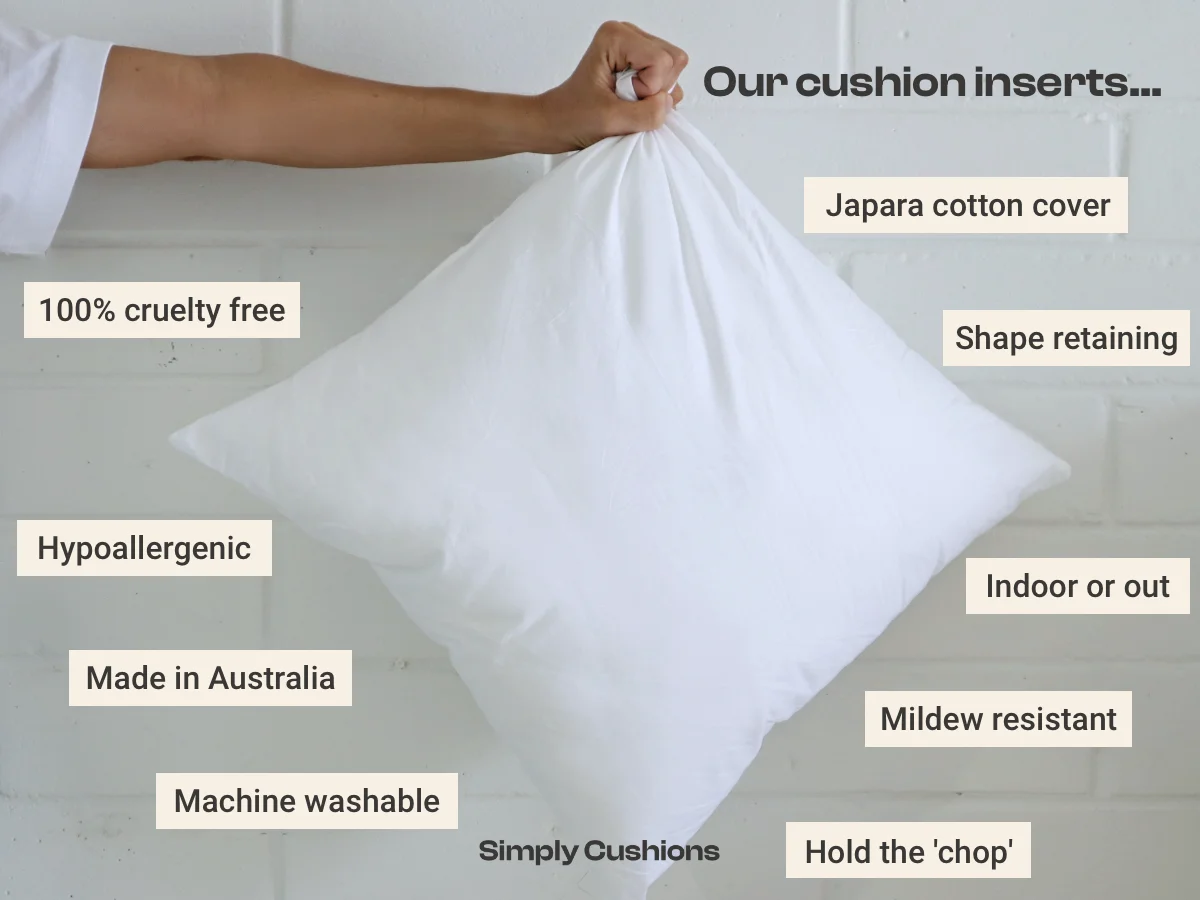
With your outdoor cushion covers selected, the final step is choosing quality outdoor cushion inserts that will stand up to the elements. Outdoor cushions face more than daily use; they must withstand moisture, sunlight, and temperature changes without losing their shape or comfort.
Not all inserts are up to the task. Budget polyester varieties are often included with cheap outdoor cushions, but they’re typically underfilled, prone to clumping, and quick to sag. Their covers can tear easily and they don’t provide much support or structure.
Feather inserts, though popular indoors, are not suited for outdoor use. They absorb moisture, which can lead to mould growth and unpleasant odours when damp. Additionally, they are not hypoallergenic and are often sourced unethically.
That’s why we use microblend cushion inserts, a high-performance, down-alternative fill designed for both indoor and outdoor use. These inserts are water-repellent, mildew-resistant, and machine washable. They’re supportive, comfortable, and hold their shape through changing weather. Plus, they still give you that crisp, elegant ‘chop’ look with ease.
Made in Australia and sized to perfectly fit our covers, these inserts are durable, cruelty-free, and built to last, whether your cushions live inside or outside.
Wrapping up
Choosing outdoor cushions isn’t just about colour or pattern, it’s about creating a space that you want to spend time in.
This guide has helped you navigate the key decisions: finding the right colours, selecting durable fabrics, deciding on sizes and numbers, and bringing it all together with practical styling choices.
When all of these elements work together, your outdoor cushions won’t just decorate your outdoor area, they’ll elevate how it feels and functions.
And remember, there’s no single formula for getting it right. You can build your own combination or start with one of our ‘done for you’ outdoor sets; either way, the goal is to create something that feels good to live with and lasts well beyond one season.


